Garden Clearance in Morden

Garden Clearance Morden supports homeowners, landlords and property managers who need outdoor areas cleared in a practical, orderly way. The service is centred on removing unwanted green waste, broken garden items and accumulated outdoor clutter so the space can be used again with less effort. Our approach is straightforward: identify what needs taking away, separate reusable or recyclable materials where suitable, and leave the area ready for its next stage of use, whether that is tidying, maintenance or a larger project.
We handle clearance work for many kinds of outdoor spaces, from compact rear gardens to larger plots with sheds, borders and hardstanding areas. That can include branches, hedge cuttings, leaves, soil, turf, plant trimmings, old pots, damaged outdoor furniture and general items left after seasonal work. Where a garden contains mixed materials, we can organise the work so the clearance is completed carefully rather than rushed, especially when access is narrow or the items are awkward to move.
The service is useful when a garden has become hard to manage because piles of waste, overgrowth or redundant items are getting in the way of normal use. It also suits customers who want a tidy finish after cutting back shrubs, clearing a neglected border, preparing for landscaping or emptying an outbuilding. Clearance is not just about removal; it is also about making the space easier to move through, easier to inspect and easier to plan for the next task.
What our garden clearance service can include
Garden clearance often starts with the obvious material and then extends to the items that make outdoor space feel cluttered. We can remove bags of leaves, prunings, clippings, loose soil, tangled roots, old compost, damaged planters and worn garden décor. If a garden has a mix of organic waste and general rubbish, it is helpful to sort those materials with care so the job is handled in a sensible order, rather than simply lifting everything together without thought for disposal routes.
For many customers, the main decision is whether the garden needs a light clear-up or a more complete removal of accumulated waste. A light clear-out may focus on a few bags and some broken pieces, while a fuller clearance can include longer-neglected corners, fence-line debris and items stored outdoors for too long. Choosing the right scope matters because it keeps the work proportionate, and it helps ensure that useful materials are not removed unnecessarily. If you are unsure, it is best to describe the contents clearly so the job can be matched to the site.
At this stage, it helps to think in terms of the areas involved rather than just the item count. Front gardens, rear gardens, side passages, patios, decking, beds and sheds may all require different handling. Some materials are best removed from the place they were stacked, while others need lifting from around obstacles or across uneven ground. A careful clearance plan keeps access sensible and avoids creating extra mess while the work is under way.
Outdoor waste, bulky items and mixed materials

Garden clearances often involve more than green waste alone. Broken fencing panels, cracked plant containers, old timber, rusted tools, collapsed trellis, damaged barrows and redundant outdoor furniture can all build up in the same space. When these items are included, the clearance needs a more considered approach because different materials may require different treatment. It is often useful to separate wood, metal, plastic and organic waste so the load is easier to manage and the disposal route is more appropriate.
Where there are heavier or awkward items, the practical focus is safe removal from the garden without damaging paths, borders or surrounding structures. Large items may need to be moved in stages, especially if access passes through narrow side returns or internal routes. For gardens with uneven ground or fragile surfaces, the work benefits from a measured pace rather than a hurried one. That keeps the site cleaner and helps reduce the risk of scuffs, spills or broken pieces being left behind.
Useful things to notice before arranging a clearance include the type of waste, whether anything is particularly heavy, and whether access is straightforward. A simple list can be enough, and if there are several different materials, arranging them by type helps the job proceed smoothly. Good preparation does not mean doing the work yourself; it means making the scope easy to understand so the clearance can be matched to the actual contents of the garden.
Green waste removal and seasonal garden tidy-ups
Many garden clearances are driven by seasonal growth and routine maintenance. After pruning, trimming, cutting back hedges or lifting beds, there is often more material than can be dealt with in ordinary household bins. That is where a dedicated clearance service is useful, because it can remove the resulting waste in a single organised visit. The service is suitable for leaves in autumn, cuttings in spring, and the larger volumes that can come after a period when the garden has been left untouched.
Green waste behaves differently from other rubbish because it is bulky, compressible and sometimes mixed with soil or damp material. A sensible clearance takes account of weight as well as volume. Branches may look manageable until they are gathered together, and wet clippings can quickly become heavier than expected. By dealing with the pile as a whole rather than piece by piece, the work can usually be completed more efficiently and with less disturbance to the rest of the garden.
If the aim is a seasonal tidy rather than a major overhaul, the service can be focused on the areas that make the biggest visual difference. Borders, lawns, paths and patio edges often collect the most stray material. Clearing them first gives the garden a cleaner outline and helps show what further maintenance, if any, is needed. It is often better to begin with the waste that is easiest to reach, then move on to the more awkward corners once the main piles have gone.
How the clearance process is organised

A well-organised clearance usually follows a simple sequence. First, the contents are assessed so the work can be scoped correctly. Next, items are removed in a sensible order, starting with materials that are easiest to access and progressing to the more awkward or bulky pieces. Finally, the area is checked so that small remnants, loose fragments and overlooked pieces are not left behind. This process helps the garden feel genuinely cleared rather than only partially tidied.
There are a few practical points that make the work smoother for everyone involved:
- Keep access routes clear where possible so larger items can be moved safely.
- Separate obviously different materials if you can do so without extra effort.
- Point out anything fragile, hidden or especially heavy before the work begins.
- Let the team know if the garden includes steps, tight corners or shared pathways.
Those details help the clearance stay controlled and avoid unnecessary handling. They also reduce the chance that something important is missed among the waste. If you are requesting a quotation, a short description of the garden and the main items usually gives enough information to establish a realistic scope. When the garden includes a shed, side return or back passage, mentioning that early makes planning much easier.
Preparing your enquiry and the price factors that matter
Quotation requests are usually clearer when they explain what is in the garden, how much of it there is and how easy it is to reach. A few photos can help if the site is difficult to describe, though they are not the only way to give useful information. If there are stairs, a long carry, locked gates or shared access points, those points should be mentioned because they affect the practical side of the job. The aim is not to create a long form, but to provide enough detail for an informed estimate.
Price factors in garden clearance are generally linked to volume, weight, access and the mix of materials involved. A bag of cuttings is very different from a pile containing timber, soil, metal and broken outdoor furniture. Jobs that require more sorting, lifting or manoeuvring may take longer than a straightforward green-waste removal. If you need to compare options, focus on the scope of the work and the contents rather than just the size of the garden, because two similar gardens can require very different clearances.
For a clear starting point, it helps to use plain language: what needs taking away, where it is located and whether anything is awkward to move. That gives a more reliable basis for discussion than broad phrases such as “lots of rubbish†or “general tidy-upâ€. Request a quotation when you are ready, and include the details that best describe the job so the response reflects the real work involved.
Garden spaces we commonly clear
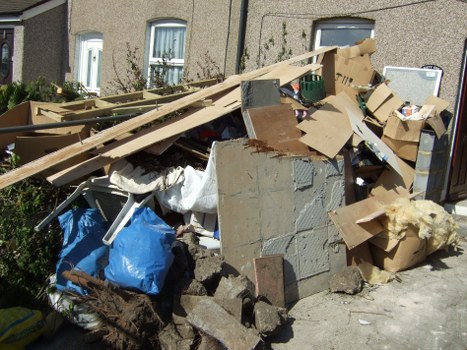
Garden clearance can be adapted to different outdoor layouts, and each one brings its own practical details. A compact courtyard may need careful handling around paving and wall planters, while a larger back garden may involve more walking distance, more debris and more places where material has gathered out of sight. We also clear front gardens, side returns, service areas and outdoor storage spaces when they form part of the same job and the scope is explained clearly.
The size of the site is only one factor. A small garden with dense overgrowth can take longer than a larger but tidier one, and a narrow passage can be more demanding than a wide open route. For that reason, it is useful to think about the structure of the space as well as the amount of waste. The clearance can then be planned around the real working conditions rather than a rough assumption about garden size alone. Pricing and quotes can be discussed once the contents and access are understood.
Different outdoor areas may also be linked by the same clearance need. For example, a neglected border might be paired with a shed full of old pots, or a patio may be used to store broken furniture and spare timber. In those cases, it is usually more efficient to treat the site as a connected whole. That keeps the process orderly and helps avoid repeated movement of the same items.
Recycling, reuse and responsible disposal
Responsible garden clearance is not only about taking material away. It also involves thinking about what can be separated, what can be recycled and what needs a different disposal route. Organic waste, wood, metal, plastic and mixed household items may each need to be handled differently. Where items are suitable for reuse or recycling, it makes sense to treat them accordingly, because that is generally more efficient than sending everything into one mixed load without checking the contents.
This is especially relevant in gardens where the waste is varied. A pile might include sacks of soil, a broken chair, a length of timber, some metal fixings and a few old ornaments. Separating them carefully can help the clearance remain tidy and purposeful. It can also make it easier to understand what remains in the garden after the main removal is complete. Recycling and sustainability explains the approach to materials in more detail.
Good disposal practice also means recognising what should stay in place. Not everything outdoors is waste, and a sensible clearance respects anything that the customer wishes to keep. If an item is near the edge of the pile or mixed in with debris, it is worth identifying it clearly before the work begins. That avoids confusion and helps ensure the final result matches the agreed scope.
About Morden
Morden is a district in south-west London best known for its connection with the River Wandle valley and for its long development from a rural settlement into an established suburban area. Historically, the parish centred on Morden Hall and the surrounding estates, with the landscape shaped by water meadows, market gardening and later residential expansion. The opening of Morden Underground station in 1926, as part of the extension of the Northern line, marked a major shift in the area’s growth and made the district more closely connected to central London. That transport change helped accelerate building across land that had previously remained comparatively open. Today, Morden sits within the London Borough of Merton and retains a mix of suburban streets, civic spaces and pockets of older landscape character. One of its best-known green spaces is Morden Hall Park, a National Trust property that preserves riverside walks, meadows and historic buildings close to the town centre. The River Wandle itself is an important local feature, running through the area and supporting wildlife habitats as well as providing a distinctive natural thread through the urban fabric. Beyond the parkland, Morden includes a range of everyday high street uses, residential roads and community facilities, with St Helier, Morden Park and nearby neighbourhoods contributing to its varied feel. The district’s architectural landscape is mixed, combining interwar and later housing with surviving older buildings and open spaces that reflect different stages of development. Its identity is shaped as much by these layers of settlement and transport as by any single landmark, giving Morden a practical suburban character alongside a strong historical continuity.
Working around access, timing and site conditions

Clearance work in a garden is often shaped by the site rather than by the waste alone. Narrow side access, shared paths, uneven paving and delicate planting can all influence how the job is approached. In some cases, it is better to move material in smaller loads; in others, a direct route through the garden is the simplest option. The main aim is to keep the work controlled so the clearance is completed efficiently without adding unnecessary disruption to the rest of the property.
Timing can also matter when the garden is being prepared for another task. If a shed is due to be emptied before repair, or an overgrown area needs clearing before landscaping, the removal should happen in a sequence that supports the next stage. That is why it helps to describe the outcome you want, not just the items you want gone. A clear statement such as “clear the back garden ready for replanting†gives a more useful brief than a general request with no context.
Contact us for a quotation when you are ready to discuss the scope, access and preferred timing. If you prefer to review the broader service first, garden clearance provides a direct route back to the main offering, while about us gives a fuller sense of the business pages available. For customers comparing related work, home clearance and waste removal may also be useful starting points.
Choosing the right scope for your garden clearance
Not every outdoor job needs the same level of intervention. Some gardens only need bulky rubbish removed so the owner can continue with routine maintenance. Others need a fuller clear-out that includes accumulated waste, deteriorated outdoor items and leftover material from previous work. The best choice depends on how much of the space is blocked, how mixed the contents are and whether the garden is intended for immediate use, repair or redesign. A sensible scope keeps the job efficient and helps avoid paying for unnecessary handling.
In practical terms, it is useful to distinguish between clearance that restores access and clearance that prepares for a bigger project. Restoring access may involve taking away obvious waste and making paths usable again. Preparing for a project can require a more thorough sweep of the area, including corners, storage spots and hidden build-ups. If you are unsure which category applies, describe the intended end result and the present condition. That allows the work to be framed around what the garden actually needs.
When you are ready to move forward, keep the request simple and specific. Ask for a quotation with the main items, the location of the waste and any access details that might affect the work. A clear brief is the easiest way to turn an overgrown or cluttered outdoor area into a manageable clearance job.