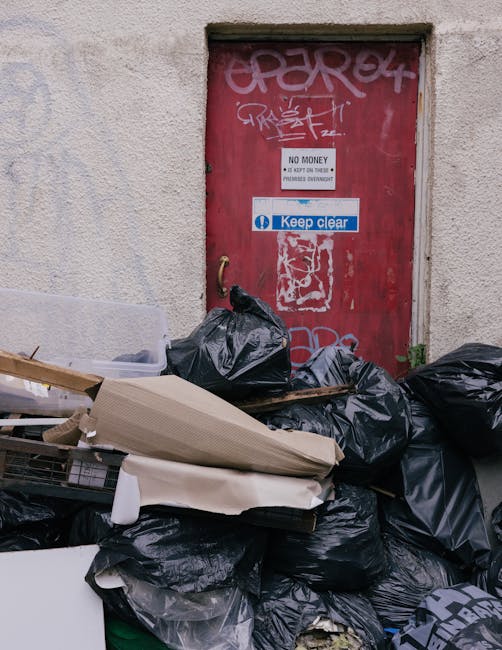
Narrow Morden streets and rubbish collection access problems
If you live or work on a tight residential road, you already know the feeling: bins half out, a van trying to squeeze past parked cars, a refusal note through the door, and everyone wondering who is supposed to move what. Narrow Morden streets and rubbish collection access problems are not a rare nuisance. They are a very real day-to-day issue for households, landlords, flat blocks, offices, and anyone trying to clear waste without causing chaos on the road.
This guide breaks the problem down in plain English. You'll see why access matters, how collection teams usually approach difficult streets, what makes a pickup succeed or fail, and which alternatives make life easier when a standard vehicle simply cannot get close enough. To be fair, it's often the smallest details that decide whether a job runs smoothly or turns into a messy delay.
For readers who want a broader sense of how different clearance jobs are handled, it can also help to compare options like waste removal, house clearance, or flat clearance depending on the type of property and volume of material involved.
Table of Contents
- Why Narrow Morden streets and rubbish collection access problems matters
- How the collection process works
- Key benefits and practical advantages
- Who this is for and when it makes sense
- Step-by-step guidance
- Expert tips for better results
- Common mistakes to avoid
- Tools, resources and recommendations
- Law, compliance, standards, or best practice
- Options, methods, or comparison table
- Case study or real-world example
- Practical checklist
- Conclusion
- Frequently asked questions
Why Narrow Morden streets and rubbish collection access problems Matters
Narrow roads change everything about rubbish collection. A vehicle that would work perfectly on a broad main road may struggle badly on a terrace street with cars parked on both sides, tight corners, low branches, or a sharp turn into a cul-de-sac. In Morden, that sort of layout is not unusual. Older roads, mixed housing stock, side alleys, shared driveways, and busy commuter parking all combine into one awkward practical issue.
Why does this matter so much? Because access affects safety, timing, cost, and whether waste can even be collected at all. When the road is too narrow, crews may have to stop further away, carry items by hand, or reschedule if the load is too heavy or the route is unsafe. That can mean missed bins, extra handling, or a job taking much longer than expected.
It also matters for neighbours. A badly placed pile of waste can block pavements, restrict visibility for drivers, or make it difficult for pedestrians with pushchairs, walking aids, or shopping trolleys. Nobody wants the bin lorry or a clearance van to be the reason a street feels even tighter. And let's face it, one awkward collection can annoy half the road before breakfast.
There's also a business angle. For landlords, letting agents, shop owners, and office managers, access issues can create knock-on delays that affect tenants, staff, and service standards. In those situations, planning a collection around the street rather than pretending the street doesn't exist is the sensible route.
For service providers, clear information matters too. If you need background on the people behind a local clearance service, it can be useful to review their about us page and check how they present their approach to safety, handling, and customer care.
How Narrow Morden streets and rubbish collection access problems Works
At a practical level, collection access is a simple question: can the vehicle reach the waste safely, and can the crew load it without creating a risk or obstruction? If the answer is yes, the job is straightforward. If not, the process changes.
Most collection teams will think through four things before they arrive:
- road width and turning space
- parking pressure and time of day
- the distance from the pickup point to the vehicle
- whether the items are loose, bulky, heavy, or fragile
On a tight street, the team may need to park further away and carry items to the vehicle. That's normal. But the distance has to be workable. A short carry with a few bags is one thing; carrying wardrobes, broken plasterboard, or a bulky sofa around a bend is another story entirely.
Street layout also affects the type of vehicle used. Smaller caged vans can sometimes reach places larger lorries cannot. On the other hand, smaller vehicles may need more trips. It's a trade-off, really. The best choice depends on the waste type, volume, and whether speed or access is the bigger issue.
Then there is the human bit that often gets overlooked: communication. A good crew will usually ask for photos, notes about parking, gate access, height restrictions, or whether the property is on a corner with limited manoeuvring room. That small amount of preparation can save a lot of hassle on the day.
If the waste is coming from a home, a loft, or a garage, it may be worth using a more tailored service such as home clearance, loft clearance, or garage clearance, because these jobs often involve more lifting, sorting, and awkward access than a simple bin collection.
Key Benefits and Practical Advantages
When access is handled properly, everybody wins. The job is safer, cleaner, and less stressful. That sounds obvious, but the practical benefits are easy to underestimate until you've seen a collection go wrong.
- Fewer missed collections: clear access instructions reduce the chance of a failed visit.
- Less manual handling risk: shorter carries and smarter parking can reduce strain on crews.
- Less street disruption: the waste is removed with less time spent blocking pavements or road space.
- Better cost control: avoiding repeat visits or extra labour usually keeps things more efficient.
- Cleaner shared areas: quick removal helps avoid fly-tipping temptations and messy communal spaces.
- Better neighbour relations: no one enjoys arguing over a skipped bin or a van stuck in the road.
There is also a quieter advantage: confidence. When residents know there is a sensible plan, they stop improvising. The bin goes where it should, the crew knows what to expect, and the whole street feels a bit less tense. It's a small thing, but it matters.
For commercial sites, access planning can also support business continuity. A tidy, well-timed collection near a shop, workshop, or office is far easier to manage than a last-minute scramble on a busy weekday morning. If that sounds familiar, services like office clearance and business waste removal are often better suited to structured access planning than ad hoc disposal.
Who This Is For and When It Makes Sense
This topic is relevant to more people than you might think. Yes, it affects residents on tight Morden streets, but the same access problem shows up in flats, conversions, small terraces, mixed-use buildings, and commercial premises with awkward rear access.
It makes sense to think about access problems if you are:
- a homeowner trying to clear bulky waste after redecorating
- a tenant whose bins are regularly hard to place for collection
- a landlord managing multiple properties with shared entrances
- a lettings agent arranging end-of-tenancy clearance
- a builder or tradesperson generating waste on a constrained street
- a shop, clinic, or office manager needing predictable removal times
It also makes sense when you are dealing with a one-off situation. For example, a sofa left in a narrow hallway, bags of garden cuttings after a weekend tidy-up, or builders' rubble piled near a front gate can all become access issues very quickly.
Sometimes the better question is not "Can it be collected?" but "What is the safest and least disruptive way to move it?" That distinction helps a lot. A household may think they need a routine bin lift, when in fact a bulkier service such as furniture disposal or builders waste clearance is the more realistic option.
Step-by-Step Guidance
If you want fewer headaches, it helps to work through the access problem in a proper order. Not glamorous. Very effective.
- Measure the access points. Check driveway width, gate gaps, turning space, stairwells, and any tight passage. Even a rough measurement is useful.
- Identify the obstacle. Is the issue parked cars, low branches, a locked gate, a steep incline, or simply not enough space to turn?
- Separate the waste by type. Different materials need different handling. Heavy rubble, green waste, furniture, and mixed rubbish all behave differently.
- Take clear photos. A few pictures from street level, the entrance, and the waste pile can tell the team more than a long message ever will.
- Check timing. Early morning, school run time, and peak parking hours can make access worse. Sometimes half an hour makes all the difference.
- Clear the route. Move cars if possible, unlock gates, and keep bins, tools, or bikes out of the path.
- Agree the pickup point. If the vehicle cannot come to the door, decide in advance where the waste will be placed for collection.
- Confirm any restrictions. Note height barriers, one-way systems, resident-only bays, or anything else that could catch the crew out.
A good rule of thumb: if a route feels tight for you on foot, it will usually feel tight for a vehicle too. Strange as it sounds, your everyday judgement is often the best early warning system.
If you are arranging a clearance with heavy or mixed waste, checking pricing and quotes ahead of time can help you compare the cost of a standard visit against a more flexible access-based collection.
Expert Tips for Better Results
Here's the part that often separates a smooth job from a frustrating one. A few small habits make narrow-street collections much easier.
1. Send photos before the booking is confirmed
Photos remove guesswork. A crew can judge whether a van can approach, whether the waste needs carrying, and whether a smaller vehicle or split load would work better. In practice, this is one of the simplest ways to avoid a wasted visit.
2. Think about the route, not just the front door
People often focus on the distance from the property to the pavement. But the real issue is the route between them. A perfectly short path can still be awkward if there is a sharp bend, step, low wall, or shared landing in the way.
3. Leave enough time for neighbours and parked cars
Street access changes through the day. A road that looks manageable at 9 a.m. can be nearly impossible by mid-afternoon if local parking fills up. If you've ever stood there thinking, "It was fine earlier," you'll know exactly what I mean.
4. Keep the load tidy
Loose waste spreads fast on a narrow road. Bagged rubbish, bundled cardboard, and stacked furniture are easier to move than scattered material. That is especially true in windy weather, when even a light gust can turn a neat pile into a small street drama.
5. Match the service to the waste
Not every collection is the same. Garden cuttings, broken wardrobes, office surplus, and refurbishment debris all call for slightly different handling. If you are dealing with mixed materials, it may help to explore garden clearance, furniture clearance, or office clearance rather than trying to force everything into one generic pickup.
Common Mistakes to Avoid
Access problems are often made worse by avoidable assumptions. The good news is that most of them are easy to fix once you know what to look for.
- Assuming a large vehicle will fit. It may not. And if it doesn't, the whole job slows down.
- Not mentioning parked cars. If resident parking is tight, say so early.
- Forgetting about height restrictions. Arches, trees, cables, and low brickwork can all matter.
- Leaving waste in several spots. Multiple piles mean extra walking and extra confusion.
- Ignoring shared access rules. Flats and converted buildings often have limits on where waste can be left.
- Booking too late in the day. By then, the street may already be full of parked vehicles.
One common slip-up is treating rubbish collection like a pure lift-and-drop exercise. In narrow Morden streets, it is really a logistics problem. That means the little things-parking, route, size, timing-matter more than people expect.
Tools, Resources and Recommendations
You do not need specialist kit to prepare for a collection, but a few basic tools make the process easier and safer.
- Measuring tape: useful for gate widths, passageways, and turning points.
- Phone camera: photos are often the fastest way to explain access.
- Marker labels or notes: helpful if several types of waste need separating.
- Gloves and sturdy footwear: sensible for any handling, even light lifting.
- Bin bags and straps: keep loose material controlled.
- Access note: a short written note about gates, codes, or parking quirks can save time.
There are also a few website pages worth looking at if you want more detail on how a professional clearance service handles operational issues. The recycling and sustainability page is useful if you want reassurance about how waste should be separated and directed, while insurance and safety helps clarify the kind of protection and careful working you should expect from a provider.
For people concerned about terms, process, or what happens once a booking is made, the site's terms and conditions page is also worth reviewing before you commit. That sort of checking feels dull for about five minutes, then very sensible afterwards.
Law, Compliance, Standards, or Best Practice
This topic touches on practical compliance more than deep legal theory, but the basics still matter. Waste should be handled responsibly, not dumped, and any collection should avoid causing danger or unnecessary obstruction. On narrow streets, that means keeping pavements passable where possible, avoiding unsafe manual lifting, and not leaving waste in ways that create a public hazard.
For households and businesses alike, best practice usually means:
- presenting waste in a controlled, manageable way
- being honest about access limitations before collection day
- avoiding unsafe lifting or carrying beyond what is reasonable
- keeping entrances, fire exits, and shared routes clear
- separating recyclable material where practical
For business premises, there is an extra expectation of planning. A shop, office, or contractor working in a tight street should think ahead about collection windows, loading space, and how the waste will be stored temporarily. That is especially true if customers, staff, or other tenants use the same entrance.
If you want a clearer picture of a provider's standards, check their health and safety policy and the practical detail in their accessibility statement. Together, these pages can tell you a fair amount about how seriously they treat awkward access, shared spaces, and user needs.
Options, Methods, or Comparison Table
There is no single best solution for every narrow-street collection. The right method depends on the waste, the property type, and how tight the access really is. Here is a simple comparison to help you think it through.
| Method | Best for | Pros | Watch out for |
|---|---|---|---|
| Standard roadside collection | Waste that can be left close to the kerb | Simple, quick, familiar | Fails if parking or street width is too tight |
| Small-vehicle pickup | Very narrow roads or tight turns | More flexible access | May need more trips for larger loads |
| Hand-carry from property to vehicle | Flats, shared entrances, short routes | Works when vans cannot reach the door | Needs good planning and enough labour |
| Full clearance service | Mixed loads, bulky items, larger household clear-outs | Less stress for the customer | Needs accurate access information |
| Specialist clearance by waste type | Garden waste, furniture, builders' rubble, office items | Better handling and better fit for the material | Choosing the wrong service can waste time |
In many cases, the best answer is a combination. For example, a small vehicle may collect from the road while the crew carries items from a rear garden or basement flat. That sounds a bit fiddly, but it is often the most realistic option in dense streets.
Case Study or Real-World Example
Picture a typical Morden side street on a damp Monday morning. Cars are parked on both sides, a narrow passage runs beside the house, and the waste includes an old wardrobe, three bin bags, a broken desk chair, and a few heavy boxes from the loft. The owner thinks the items can simply be lifted from the front room to the van. In reality, there's a gate code, a shared path, and barely enough room for a large vehicle to turn.
What usually works best in that situation is not force, but planning. The collection team asks for photos, confirms the gate width, and decides to park further down the road where there is a wider section. The wardrobe is taken apart if needed, lighter items are bagged, and the carry route is kept clear. The job still takes effort, but it avoids blocking the street and keeps the neighbours on side.
That is the real lesson: access problems rarely disappear, but they do become manageable when the route, vehicle, and waste type are matched properly. A rushed approach usually creates more noise, more lifting, and more stress. A measured one feels calmer. Cleaner, too.
Practical Checklist
Use this before booking or presenting waste for collection:
- Have I checked the street width and any obvious pinch points?
- Are there parked cars, gate codes, or locked entrances to mention?
- Is the waste bagged, stacked, or separated in a sensible way?
- Do I know where the vehicle can safely stop?
- Have I taken photos of the access route and the waste itself?
- Have I told the provider about stairs, shared halls, or rear access?
- Is the collection timed to avoid the busiest parking period?
- Do I know whether this is standard rubbish, bulky waste, or a specialist clearance job?
- Is there enough space to keep pavements and entrances clear?
- Have I checked any booking, safety, or payment details in advance?
That last one sounds boring, but it saves hassle. Every time.
Conclusion
Narrow streets in Morden create a very practical kind of rubbish collection problem: not enough room, not enough visibility, and not enough margin for guesswork. But once you understand the access issues, the whole situation becomes much easier to manage. Measure the route, explain the obstacles, choose the right collection method, and keep the waste as tidy as possible. Simple, but not always easy.
The real advantage comes from planning ahead instead of reacting on the day. That one change can reduce missed collections, lower stress, and make the street safer for everyone. Whether you are clearing a flat, a family home, a garage, or a business premises, good access planning is the difference between a smooth pickup and a frustrating delay.
If you need help matching the right collection approach to your property, take a look at the service pages, check the safety and pricing information, and make sure the booking details reflect the actual street conditions. It really does make life easier. And, truth be told, that's what people want most.
Get a free quote today and see how much you can save.
Frequently Asked Questions
What causes rubbish collection access problems on narrow Morden streets?
The most common causes are parked cars, tight turning space, limited road width, low branches, shared access paths, and properties that sit far back from the road. Even a short street can become awkward if several of those factors stack up at once.
Can a rubbish collection still happen if the van cannot reach my front door?
Often, yes. The crew may be able to park nearby and carry waste to the vehicle. The key question is whether the carry distance, item weight, and street layout are still safe and workable. If the route is too difficult, a different method may be needed.
Should I book a standard collection or a full clearance service?
If you only have a small, easy-to-reach pile of waste, a standard collection may be enough. If the access is tight, the load is bulky, or the job involves several rooms or heavy items, a fuller service such as house clearance or furniture disposal is usually more practical.
What information should I give before the collection day?
Share the street name, access route, parking restrictions, gate codes, photos, waste type, and any obstacles such as steps or narrow hallways. The more accurate the description, the fewer surprises later on.
Are narrow streets more expensive to service?
They can be, but not always. Extra labour, longer carry distances, or additional trips may affect the price. The exact cost depends on the waste volume, access conditions, and the type of service required. A clear quote usually depends on good information up front.
What happens if the crew cannot safely collect the waste?
If access is too restricted or unsafe, the job may need to be rescheduled, adjusted, or handled with a different vehicle or service type. That is annoying, yes, but it is better than forcing a risky lift or blocking the street.
How can I make collection easier on a busy residential road?
Try to choose a quieter time of day, keep the waste in one tidy location, move any vehicles if possible, and give the provider photos before arrival. A few minutes of prep can save a lot of walking and guesswork.
Does this problem affect flats and shared buildings too?
Very much so. Flats often add more layers: shared entrances, stairwells, communal bins, and rules about where waste may be left. In those situations, services like flat clearance or office clearance can be a better fit than a simple roadside pickup.
What kind of waste is hardest to deal with in narrow streets?
Bulky furniture, mixed builders' waste, heavy soil or rubble, and loose garden material are usually the most awkward. They take up space, can be difficult to carry, and are more likely to cause obstruction if the route is tight.
How can I check whether a provider is prepared for access problems?
Look for clear information on pricing, safety, insurance, recycling, and how they handle different property types. A provider that explains these things plainly is usually better prepared for the realities of tight streets.
Is it worth separating waste before collection?
Yes, absolutely. Sorted waste is easier to load, quicker to handle, and often less disruptive on narrow roads. It also helps the crew decide whether items need special treatment or can be moved in a simpler way.
Where can I find more practical information before booking?
Useful starting points include the site's pages on pricing and quotes, recycling and sustainability, health and safety, and the relevant service pages for the type of waste you need to remove. A little reading beforehand can spare you a lot of faff on the day.